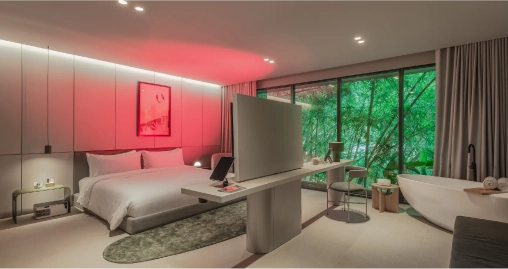
Biohacking has a marketing problem. The word conjures cold plunges, wearable rings, red light panels and men in their forties explaining their glucose curves on podcasts. That imagery has made the term feel simultaneously intimidating and slightly ridiculous, which is a shame, because the underlying idea is neither.
Stripped of the theatre, biohacking is straightforward: using habits, measurement and technology to try to improve how your body and mind perform, and checking whether it actually worked.
This guide covers what that means in practice, which parts hold up, which parts are mostly aesthetic, and where a reasonable person should begin.
A working definition
Biohacking is the deliberate, self-directed adjustment of inputs sleep, light, food, movement, temperature, stress with some form of feedback to judge the result.
The feedback part matters. Taking a supplement because a podcast recommended it is not biohacking; it is following advice. Tracking how a change affects your sleep, energy or recovery over several weeks, and keeping or discarding it based on what you observe, is the actual method.
That framing also explains why the field attracts scepticism. A lot of what gets sold under the label skips the measurement entirely and goes straight to selling the device.
The hierarchy nobody wants to hear
There is a clear order of impact, and it is boring at the top.
Tier one: the fundamentals. Sleep duration and consistency, daylight exposure, daily movement, protein and vegetable intake, and alcohol reduction. These account for the overwhelming majority of achievable improvement for most people. They cost nothing.
Tier two: structured practices. Resistance training, deliberate heat exposure such as sauna, cold exposure, breathing practices, and eating windows. These have reasonable supporting evidence and meaningful effects, but only once tier one is consistent.
Tier three: measurement and technology. Wearables, continuous glucose monitors, blood panels, red light, hyperbaric chambers. These can be genuinely useful for refining an already solid routine. They do almost nothing for someone sleeping five hours a night.
The uncomfortable truth is that most people buy tier three while ignoring tier one. A ring that tells you your sleep is poor is not a solution to poor sleep.
What to do in your first month
If you want a starting protocol that costs nothing:
- Fix your sleep window. Same bedtime and wake time, seven days a week, within about 30 minutes. Consistency matters more than total duration for most people.
- Get morning daylight. Ten to twenty minutes outside within an hour of waking. This is the single strongest lever on circadian rhythm.
- Move every day. Not a training programme just walking, at volume. Then add two or three resistance sessions per week.
- Eat protein at every meal. The simplest nutritional change with the widest effect on satiety and body composition.
- Cut evening alcohol. It is the most common invisible destroyer of sleep quality among people who believe they sleep fine.
Run that for four weeks before adding anything else. Then, and only then, consider a sauna protocol, cold exposure or a tracking device.
Where travel fits in
Travel is usually where routines collapse. Time zones shift, sleep fragments, training stops and food becomes whatever is nearby.
It is also, paradoxically, one of the better moments to reset a routine, because the usual environmental cues that hold bad habits in place are gone. A stay built around rest rather than around nightlife can do more for a habit reset than months of good intentions at home.
That is the logic behind properties designed for recovery rather than for entertainment: rooms designed for rest, whole-food dining and scheduled movement, so the default option in the environment is the useful one.
What the label gets wrong
Three honest caveats.
Biohacking is not medicine. It is a lifestyle framework. It does not diagnose, treat or replace clinical care. Anyone with a health condition should be working with a professional, not with a podcast.
Individual variation is enormous. Protocols that transform one person do nothing for another. This is precisely why the measurement half of the definition exists.
Evidence quality varies wildly. Sleep, resistance training and daylight exposure rest on solid ground. Many of the more photogenic interventions rest on small studies, surrogate markers or extrapolation. Being honest about that difference is a feature, not a weakness.
Starting without buying anything
The most useful thing about biohacking is also the least marketable: the highest-impact interventions are free and available today. Sleep at the same time. Go outside in the morning. Walk more. Lift something heavy twice a week. Eat food you can recognise. Drink less.
Everything after that is refinement. Worth doing, but only in that order.
If you want to experience what a fully structured version looks like before committing to it at home, that is one of the reasons a stay at a hotel in El Poblado, Medellín built around longevity can be a useful proof of concept rather than just a break.
Frequently Asked Questions
What does biohacking mean?
Using habits, measurement and technology to try to improve physical and cognitive performance, and evaluating the results rather than assuming them.
Where should a beginner start?
Sleep consistency, morning daylight, daily movement and protein intake. Devices add very little until those basics are stable.
Is biohacking a substitute for medical care?
No. It is a lifestyle complement and does not replace professional diagnosis or treatment for any condition.
Do I need expensive equipment?
No. The interventions with the strongest supporting evidence cost nothing. Technology helps refine an existing routine, not build one.
How does biohacking relate to longevity?
Longevity focuses on sustained quality of life over decades. Biohacking supplies the tools for measuring and adjusting habits in that direction.