Longevity travel is the fastest-growing travel category of the past few years and also the one most saturated with empty marketing. Any hotel with a massage table and a green juice can call itself a longevity property. The difference between a serious offer and a label sits in specific criteria, and this article tries to supply them.
What it is and where it came from
Longevity travel means trips built around rest, nutrition and recovery therapies, framed around long-term health rather than a one-week disconnect. The underlying idea is healthspan: not living more years, but arriving at those years still functioning well.
Its growth has fairly mundane explanations. First, the public conversation about sleep, metabolism and ageing went mainstream. Second, consumer measurement devices rings, watches, body-composition scales gave millions of people data about themselves and a desire to act on it. Third, the traveller who used to want a spa now wants something measurable.
How it differs from wellness tourism
Classic wellness aims at immediate relaxation: the goal is to feel good during the stay. Longevity is framed as continuity of habits: the goal is to leave with something that survives the trip.
That produces visible differences:
| Wellness tourism | Longevity travel |
| À la carte standalone treatments | Structured day-by-day programming |
| Focus on sensory experience | Focus on sleep, movement and food |
| Success = relaxation during the stay | Success = a habit you can repeat at home |
| The spa is the centre | The room and the kitchen count too |
The overlap with what biohacking is is obvious, with one difference in tone: biohacking is experimental and individual, while longevity applied to hospitality is more conservative and more protocol-driven.
Five criteria for judging an offer
1. Is the room actually designed for sleep? This is the fastest filter and the most revealing one. Real darkness, temperature control, sound insulation and no unnecessary blue light matter more than anything in the treatment catalogue. A hotel offering a hyperbaric chamber with curtains that leak light has misunderstood the problem. If you’re crossing time zones it matters even more here are the strategies for how to sleep better while traveling. You can see how our rooms are set up against those criteria.
2. Is there real food, or just the aesthetics of healthy food? Look for menus with adequate protein, local produce and flexible timing. A breakfast of photogenic bowls carrying twelve grams of protein sustains nothing.
3. Who designed the programming? There should be identifiable professional judgement behind it. If nobody signs the protocol, there probably isn’t one.
4. Are the therapies integrated or sold as a loose menu? Sequence matters: heat and cold, movement and recovery, and above all the order within the day. Standalone therapies sold by the unit are a spa under another name.
5. Do you take anything home? A serious programme ends with something repeatable: routines, criteria, habit adjustments. If it all depends on being in the building, the effect fades within a week.
What a longevity stay usually includes
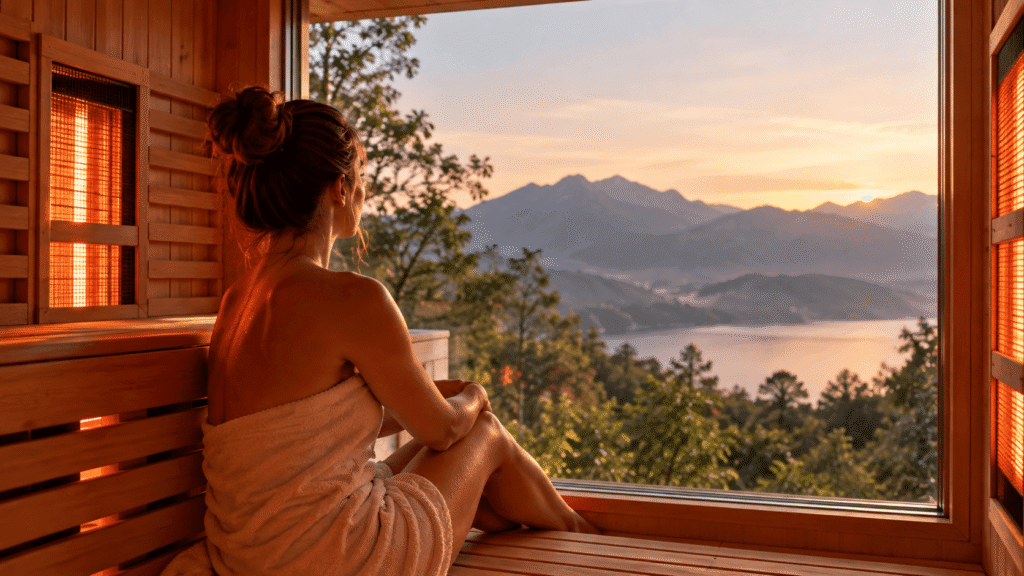
Sleep optimised accommodation, whole-food dining, recovery therapies sauna, cold exposure, breathwork, sound healing and structured movement. No prior experience is needed; these programmes are generally designed for people with no technical background at all.
Why Colombia, and why Medellín
Medellín has a structural advantage that’s hard to replicate: stable year-round climate, moderate altitude, fresh produce available in any month, and costs that make long stays viable without European retreat pricing. Add hotel infrastructure concentrated in a few walkable areas, and sustaining a daily routine without a car becomes realistic.
That’s why the city has become a hub for properties combining longevity, biohacking and conscious food, most of them in and around our corridor as a luxury hotel in El Poblado, Medellín.
FAQ
What is longevity travel?
Trips built around rest, nutrition and recovery therapies, framed around long-term health rather than a short break.
How is it different from wellness tourism?
Wellness aims at immediate relaxation; longevity is framed as continuity of habits beyond the stay.
What does a longevity stay usually include?
Sleep-optimised accommodation, whole-food dining, recovery therapies and structured movement.
Do I need prior experience?
No. These programmes are generally designed for people with no technical background.
Where can I find this in Colombia?
Medellín has become a hub for properties combining longevity, biohacking and conscious food.