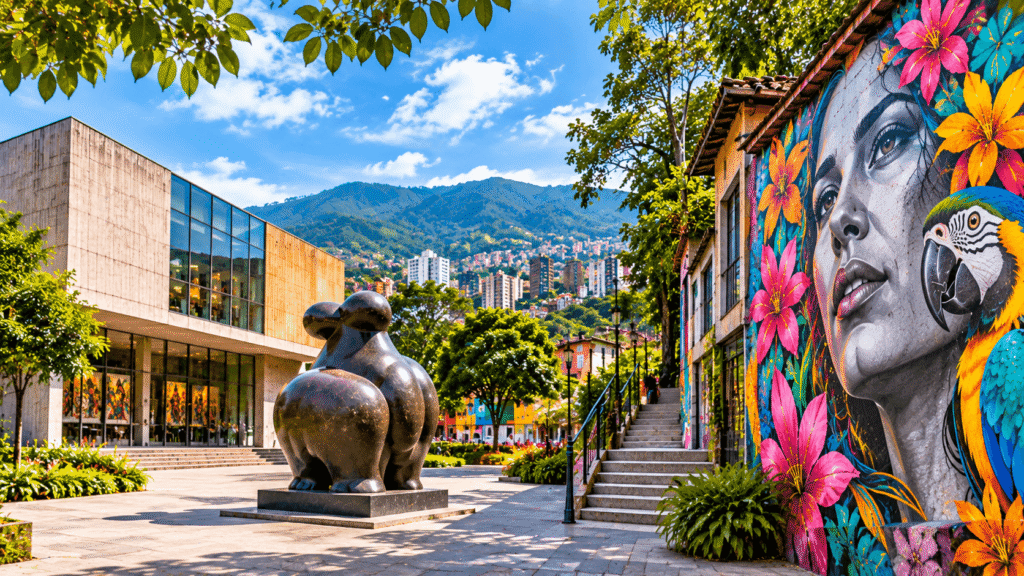
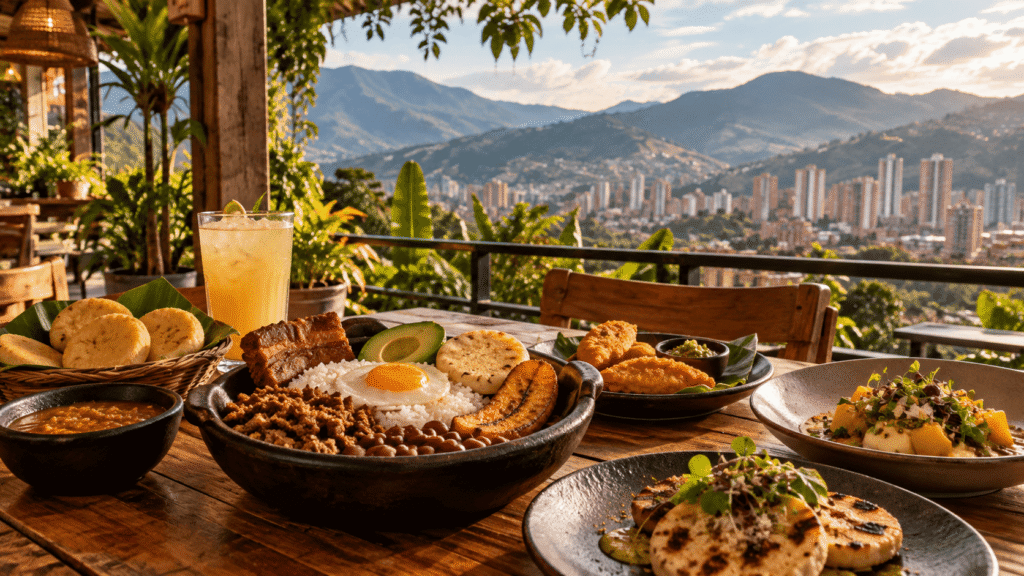
Medellín’s art scene splits into two circuits that rarely appear in the same guide. One runs through the art galleries in Medellín’s southern districts and the modern art museum: white walls, rotating shows and free entry at most galleries. The other climbs the hillsides of Comuna 13 and runs through the city centre, where murals, public sculpture and museums tell the story of how Medellín changed over the last few decades. Each fits into half a day, and seeing both is the best way to understand the city.
This guide covers what to expect from each circuit, two suggested half-day routes, the museums worth prioritising and practical notes on timing, transport and etiquette.
The two circuits at a glance
| Gallery circuit | Street-art circuit | |
|---|---|---|
| Area | El Poblado and Ciudad del Río | Comuna 13 and downtown |
| Best time | Weekday afternoons, or an opening night | Mornings, before the heat and the crowds |
| Pace | Slow, mostly indoors | On foot, with stairs and escalators |
| Guide needed? | No | Strongly recommended for Comuna 13 |
| Cost | Galleries free; museum entry modest | Tour fee, metro fare, museum entry |
| Good for | Contemporary art and design | Recent history and public art |
Contemporary art galleries in El Poblado
Most of the city’s commercial galleries are in El Poblado and the districts around it, close to the restaurants and hotels. They tend to be small spaces showing Colombian artists, many of them from Antioquia, alongside some names from elsewhere in Latin America. Exhibitions usually change every month or two, so a gallery you liked can be worth a second visit on a return trip.
Entry is free, and gallery staff are generally happy to talk about the work, the artist and prices if you ask. You don’t need to be a buyer to walk in. If you are thinking of buying, ask about a certificate of authenticity and shipping before you commit; galleries that sell to visitors are used to arranging both.
How to find out what’s on
Programmes change often and opening hours vary. Some galleries close on Mondays, and smaller spaces may open only by appointment. Most galleries announce exhibitions and openings on Instagram, which is the quickest way to check before you set out.
Gallery openings usually happen on weekday evenings, with the artist present and drinks served. If one falls during your stay, it’s the best way to see who makes and buys art in Medellín.
Ciudad del Río, Laureles and Envigado
Ciudad del Río, between El Poblado and the river, is where you’ll find the Museum of Modern Art and the park around it. Laureles and Envigado have a few independent spaces, studios and design shops of their own. They’re more relaxed than the commercial galleries in El Poblado and a good place to look for work by younger artists.
Route 1: galleries and modern art (half a day)
| Stop | Time to allow | Notes |
|---|---|---|
| Museum of Modern Art of Medellín (MAMM), Ciudad del Río | 1.5 hours | Housed in a former industrial building; check the temporary shows before you go |
| Contemporary art galleries in El Poblado | 1.5 to 2 hours | Several commercial galleries with rotating exhibitions; check opening hours, as some close on Mondays |
| Museo El Castillo (optional) | 1 hour | A castle-style house in the hills of El Poblado, with decorative arts and gardens |
| Coffee or an early dinner in Provenza | 1 hour | A good place to talk about what you saw |
Start at MAMM in the late morning or early afternoon, then take a short taxi or ride-app trip into El Poblado for the galleries. Plan the gallery stops in advance and group them by area, since some are a few blocks apart and others need a short ride. If an opening is on that evening, end the route there instead of in Provenza.
Is the Comuna 13 graffiti tour worth doing?
It is, particularly with a local guide, since the historical context matters as much as the murals themselves. Comuna 13 went through some of the worst violence in the city’s recent history, including a large military operation in 2002. The outdoor escalators, the murals and the hip-hop scene came out of what followed, and many guides grew up in the neighbourhood.
What the tour covers
Most tours meet at San Javier metro station and last two to two and a half hours. You walk up through the neighbourhood along the escalators, stopping at murals while the guide explains who painted them and what they refer to. On busy days there are often hip-hop and breakdance performances along the way, plus stalls selling local snacks and crafts. There are plenty of stairs between the escalator sections, so wear comfortable shoes and bring water.
Booking and choosing a guide
Book a day or two ahead, especially for weekends. Look for tours run by residents or neighbourhood organisations, and check what the price includes before you pay. Group tours are the cheapest option; private tours cost more but let you set the pace and ask more questions. Tipping your guide at the end is common.
Etiquette in the neighbourhood
The area is busy with visitors, and that brings its own etiquette. Ask before photographing residents, buy from local vendors and treat it as a neighbourhood people live in. Murals are often painted by artists from the area, and buying a print or a small piece from them is a direct way to support their work.
Medellín street art and public sculpture downtown
The city centre is where most of Medellín’s public art is concentrated. Plaza Botero, in front of the Museo de Antioquia, has 23 bronze sculptures that Fernando Botero donated to the city, and you can walk among them freely. Beside the square, the black-and-white Palacio de la Cultura Rafael Uribe Uribe is one of the most photographed buildings in the city.
A few blocks away, Parque San Antonio has one of the most affecting pieces in Medellín. In 1995 a bomb hidden under a Botero sculpture of a bird exploded during a concert, killing more than twenty people. Botero asked for the damaged sculpture to stay where it was and later placed a new one, the Bird of Peace, beside it. The two now stand side by side.
Further south, at the La Alpujarra administrative centre, the Monumento a la Raza by Rodrigo Arenas Betancourt tells the history of Antioquia in a single, very large sculpture. Murals also appear on walls across the centre, so keep looking up between stops.
Downtown is busy and best seen in daylight. Keep phones and cameras close, especially around the plazas.
Route 2: street art and the city’s story (half a day)
| Stop | Time to allow | Notes |
|---|---|---|
| Metro to San Javier station | 30 minutes from El Poblado | The metro is the easiest way to reach Comuna 13 |
| Comuna 13 graffiti tour | 2 to 2.5 hours | Murals along the outdoor escalators, with a local guide |
| Museo de Antioquia and Plaza Botero | 1.5 hours | Fernando Botero’s paintings inside and his bronze sculptures in the square |
| Parque San Antonio (optional) | 20 minutes | The two Botero birds, one damaged in the 1995 bombing |
| Casa de la Memoria (optional) | 1 hour | The city’s memory museum on the armed conflict |
From Comuna 13, ride the metro back from San Javier, change to Line A at San Antonio station and get off one stop later at Parque Berrío, a short walk from Plaza Botero. Parque San Antonio is right by the transfer station if you want to stop on the way.
Route 2 is a lot for one morning. If you’d rather slow down, keep Comuna 13 for the morning and move the museums to another day.
Museums in Medellín to prioritise
| Museum | What you’ll see | Where |
|---|---|---|
| Museo de Antioquia | A large collection of Botero’s work, donated by the artist, plus Colombian art from several centuries | Downtown, on Plaza Botero |
| Museum of Modern Art of Medellín (MAMM) | Modern and contemporary art, film and temporary exhibitions | Ciudad del Río |
| Casa de la Memoria | Recent history and the armed conflict, told through testimony | Near Parque Bicentenario |
| Museo El Castillo | Decorative arts in a castle-style house with formal gardens | El Poblado |
| Museo Universitario (MUUA) | Art, anthropology and natural history | Universidad de Antioquia campus |
| Casa Museo Pedro Nel Gómez | The house, studio and murals of Medellín’s best-known muralist | Aranjuez |
Museo de Antioquia
Founded in 1881, this is one of the oldest museums in Colombia, and today it occupies the former municipal palace on Plaza Botero. The main draw is the collection Botero donated, with his paintings and sculptures plus works by other artists from his own collection. The rest of the museum covers Colombian art from the colonial period onwards, and the building itself has murals by Pedro Nel Gómez. Allow at least an hour and a half.
Museum of Modern Art of Medellín (MAMM)
MAMM is in a former industrial building in Ciudad del Río, extended with a newer contemporary wing. Its temporary exhibitions are some of the most consistently interesting in the city, and it holds a large collection by Débora Arango, the Medellín painter whose work caused a scandal in the mid-20th century for its nudes and political themes. The museum also runs a film programme, so check the listings if you’re there in the evening.
Casa de la Memoria
This museum tells the story of the armed conflict in Medellín and Colombia through testimony, photographs and personal objects. It’s heavy going, but it puts much of what you see in Comuna 13 and downtown into context. Entry is usually free. Much of the text is in Spanish, so a guide or a translation app helps.
Museo El Castillo
Built in the 1930s to look like a European castle, this house in the hills of El Poblado is now a museum of decorative arts, with furnished rooms and formal gardens. It shows a different side of the city’s history from the rest of this list and fits easily into the gallery route.
Museo Universitario (MUUA)
On the Universidad de Antioquia campus in the north of the city, the university museum mixes art with anthropology and natural history. It gets far fewer visitors than the big names and pairs well with the Botanical Garden, a short walk away near Universidad metro station.
Casa Museo Pedro Nel Gómez
The house and studio of Pedro Nel Gómez, Medellín’s best-known muralist, is in the Aranjuez neighbourhood. It holds a large body of his work, and some of his murals are painted on the walls of the house itself. It’s easiest to reach by taxi or ride app.
Museums charge modest fees and often have discounted days, so check their calendars before you go. Commercial galleries are usually free.
Planning tips for an art weekend
Comuna 13 is best in the morning, before the heat and the tour groups build up, and weekdays are quieter than weekends at every stop on both routes. Some museums close one day a week, so confirm opening days before you build your plan. Afternoon showers are common for much of the year, which makes the indoor gallery circuit a good choice for the second half of the day.
The metro is the easiest way to reach Comuna 13 and downtown, and ride apps work well for the galleries and for getting back in the evening. Carry some cash for tips, snacks and small purchases from vendors. Photography is generally allowed in galleries and on the street, though some temporary exhibitions restrict it, so look for signs or ask.
Where to stay for an art weekend
El Poblado puts you a short ride from both circuits, close to the galleries and a few metro stops from downtown. It also has the widest choice of restaurants for the evenings between routes. For more on choosing a base, see our guide on where to stay in El Poblado, or look at our luxury residences in Medellín for a longer stay.
Are there contemporary art galleries in El Poblado?
Yes, several, with rotating exhibitions and generally free entry. Many announce their shows and openings on Instagram.
Is the Comuna 13 tour worth doing?
It is, particularly with a local guide, since the historical context matters as much as the murals themselves.
How do I get to Comuna 13?
Take metro Line B to San Javier station, where most tours meet.
Is it safe to visit Comuna 13?
Most visits go smoothly with a guide during the day. The tour route is busy with visitors, and guides know the neighbourhood well.
Which museums should I prioritise?
Museo de Antioquia, the Museum of Modern Art and Casa de la Memoria cover art and recent history. Add Museo El Castillo or Casa Museo Pedro Nel Gómez if you have more time.
Where can I see Botero’s work in Medellín?
Inside the Museo de Antioquia, in Plaza Botero just outside it, and at Parque San Antonio, where his two bird sculptures stand.
How long do I need for an art route?
Two half-days is enough to cover galleries and street art without rushing.
Do galleries charge admission?
Commercial galleries are usually free; museums charge modest fees with discounted days.