Paisa food has a reputation problem: it gets reduced to the bandeja paisa, which is enormous, heavy and represents maybe half of what people in Medellín actually eat. This guide moves from traditional to contemporary, with the vocabulary explained, because most first-trip confusion disappears once you can read a menu.
The dishes worth trying
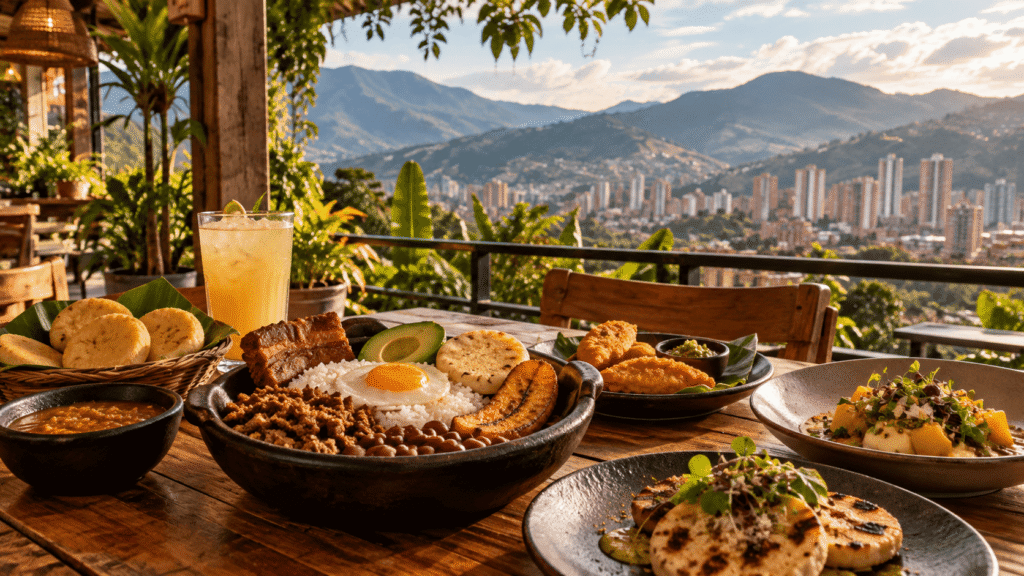
Bandeja paisa. Beans, rice, ground beef, pork crackling, chorizo, a fried egg, plantain, an arepa and avocado. It’s farm food built for a day of physical labour, so order it at lunch, not dinner. One plate comfortably feeds two people with normal appetites.
Sancocho antioqueño. A beef or chicken soup with cassava, plantain and corn. Less famous and arguably the better dish. It’s what families eat on Sundays.
Arepa de chócolo. A sweet young-corn arepa served with fresh quesito. The best entry point to local food: cheap, quick, no risk.
Mondongo. Tripe soup. It divides opinion even among locals. If you like offal, this is a very good version of it.
Buñuelos and pandebono. Everyday bakery. A buñuelo should be eaten fresh and in the morning; cold, it loses everything.
Vocabulary that prevents mistakes
- Quesito: soft fresh cheese, not cheddar or mozzarella.
- Aguapanela: hot cane-sugar infusion, sometimes with cheese in it. Everyday, not a tourist thing.
- Mazamorra: corn cooked in milk, eaten as a dessert or snack.
- Un tinto: a small black coffee. Nothing to do with wine.
- Corrientazo: the set lunch menu soup, main, juice. The best value in the city, by a distance.
Fruit you won’t find at home
Lulo, guanábana, granadilla, mangostino and uchuva surprise most first-time visitors. The easiest way in is juice: en agua is lighter, en leche is closer to a smoothie. A lulo juice in water is probably the most honest introduction to Colombian fruit there is.
Contemporary kitchens: the other half of the story
Over the past few years Medellín has built a serious chef-driven scene working Colombian produce with modern technique, and most of it sits in El Poblado and Provenza. Book ahead there, especially Thursday to Saturday. If you’re giving that area an evening, this guide to what to do in Provenza helps you build the night around dinner instead of improvising.
Staying nearby genuinely changes the food experience: you can walk home, try two places in one night and never depend on a car. The hotel in El Poblado, Medellín sits inside that radius.
Meal times: the most confusing detail
Lunch runs from noon to 2pm and is traditionally the biggest meal of the day. Many traditional restaurants close mid-afternoon and don’t reopen. Dinner starts earlier than in Spain or Argentina: 8pm is normal, and by 10pm many kitchens are closing. Arrive hungry at 11pm and your options narrow to fast food.
If you plan to cook at some point
On stays longer than a week, the pattern that works best is eating out at midday where the corrientazo is unbeatable on price and cooking something light at night with market produce. The luxury residences in Medellín have full kitchens, and Plaza Minorista or neighbourhood markets handle the shopping at local prices.
And if you’re still building the trip, this 3-day Medellín itinerary groups meals by area so you’re never crossing the city hungry.
FAQ
What is Medellín’s signature dish?
Bandeja paisa, though sancocho antioqueño and arepas de chócolo are just as representative.
What exactly is in a bandeja paisa?
Beans, rice, ground beef, pork crackling, chorizo, a fried egg, plantain, an arepa and avocado.
Which local fruits should I try?
Lulo, guanábana, granadilla, mangostino and uchuva surprise most first-time visitors.
When do people eat lunch in Medellín?
Lunch runs between noon and 2pm and is traditionally the largest meal of the day.
Is there good vegetarian food?
Yes, particularly in El Poblado and Laureles, where vegetarian and vegan menus are increasingly common.